1993 Hyperinflation: Are Yugoslav 500 Billion Dinar Banknotes Valuable?
Myths and facts about FR Yugoslavia’s extreme currency: market value of the 500 billion dinar note, original bank bricks, and true collector rarities.
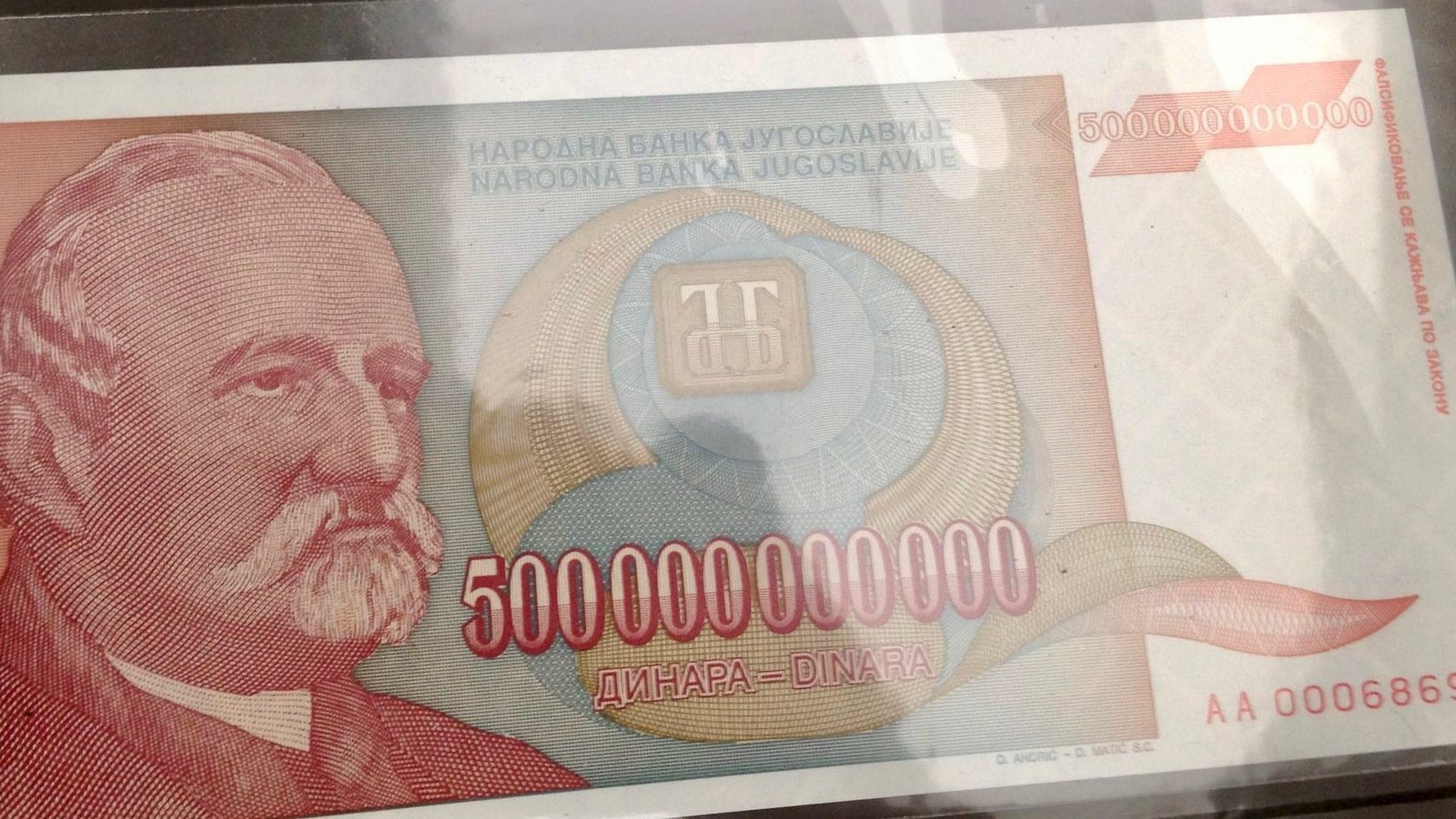
Фото: KKPCW · CC BY-SA 4.0 · Wikimedia Commons
December 1993 marked the crest of one of the most violent hyperinflationary episodes in human history. The currency of the Federal Republic of Yugoslavia deteriorated by the minute, shopkeepers adjusted prices twice daily, and the Topčider printing works in Belgrade churned out banknotes around the clock just to maintain physical cash liquidity.
The climax of this monetary collapse was the notorious 500,000,000,000 dinar (500 billion) note featuring romantic poet Jovan Jovanović Zmaj. Today, it is recognized globally as an emblem of economic turbulence, but is it actually worth a fortune?
Why Most 1993 Banknotes Have Modest Value
Finding an envelope packed with billions of dinars in an attic frequently leads discoverers to believe they have struck gold. However, numismatic economics tell a different story.
By late December 1993, new emissions lost all purchasing power before they could circulate. When monetary reformer Dragoslav Avramović introduced the "Super Dinar" pegged 1:1 to the German Mark on January 24, 1994, astronomical piles of unissued notes remained stored in vault crates and bank drawers.
Because millions survived in brand-new condition, a crisp, uncirculated (UNC) 500 billion dinar note typically trades on modern collector markets for 10 to 25 euros.
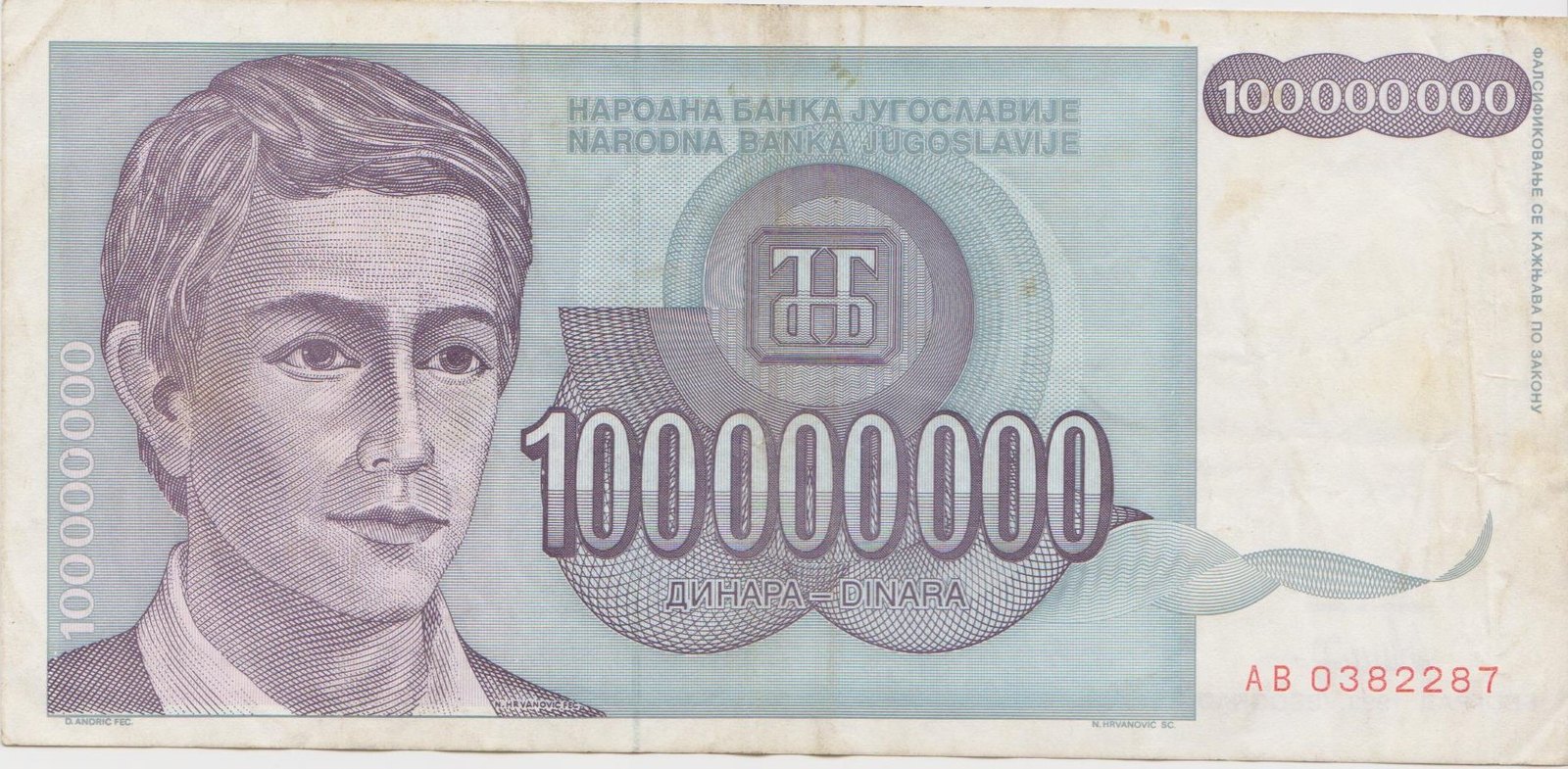
Narodna banka Jugoslavije · общественное достояние · Wikimedia Commons
What Truly Matters to Collectors
While individual standard notes are common, seasoned notaphilists pay premium prices for specific anomalies:
- Complete Mint Bricks (Packs of 100): An untouched pack of 100 sequential uncirculated notes bound in the original bank wrapper of the National Bank of Yugoslavia.
- Printing Errors (Misprints): Under extreme production pressure, quality control suffered. Banknotes displaying inverted watermarks, misplaced cutting lines showing adjacent bills, or single-sided print runs command strong collector premiums.
- Official Specimen Issues: Certified presentation samples stamped "SPECIMEN" with sequential all-zero numbering (0000000).
- Complete Annual Sets: Comprehensive chronological year sets containing every denomination issued in 1993 — from 500 thousand up to 500 billion — uniformly preserved in uncirculated grade.
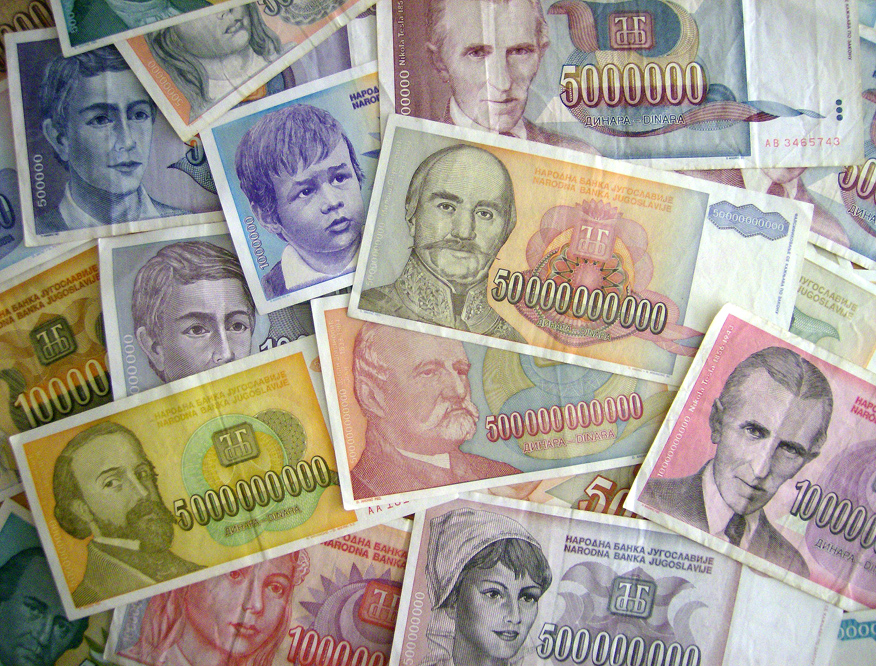
Фото: Stane77 · CC BY-SA 3.0 · Wikimedia Commons
Underappreciated Rarities: Summer 1993 Issues
Surprisingly, the 500 billion note is not the hardest to acquire. The mid-year intermediate denominations (such as 10 million, 50 million, and 100 million dinars) saw genuine heavy transactional usage.
Because ordinary citizens spent them immediately and banks shredded them during subsequent redenominations, finding mid-1993 denominations in uncirculated state is often harder than acquiring the final 500 billion note.
Storage and Selling Advice
For owners of 1993 Yugoslav currency:
- Avoid storing paper money in soft PVC sleeves containing acidic plasticizers that ruin paper ink over time.
- The highest return is realized by offering entire chronological sets or intact original bank packs through curated online auctions, reaching an international audience of historical currency collectors.