Rare Banknotes of the Kingdom of Serbia and Occupation: High-Value Rarities
Guide to the rarest Serbian paper money: from the iconic 1884 100-dinar note to wartime emergency overprints of 1941–1944 that command thousands of euros.
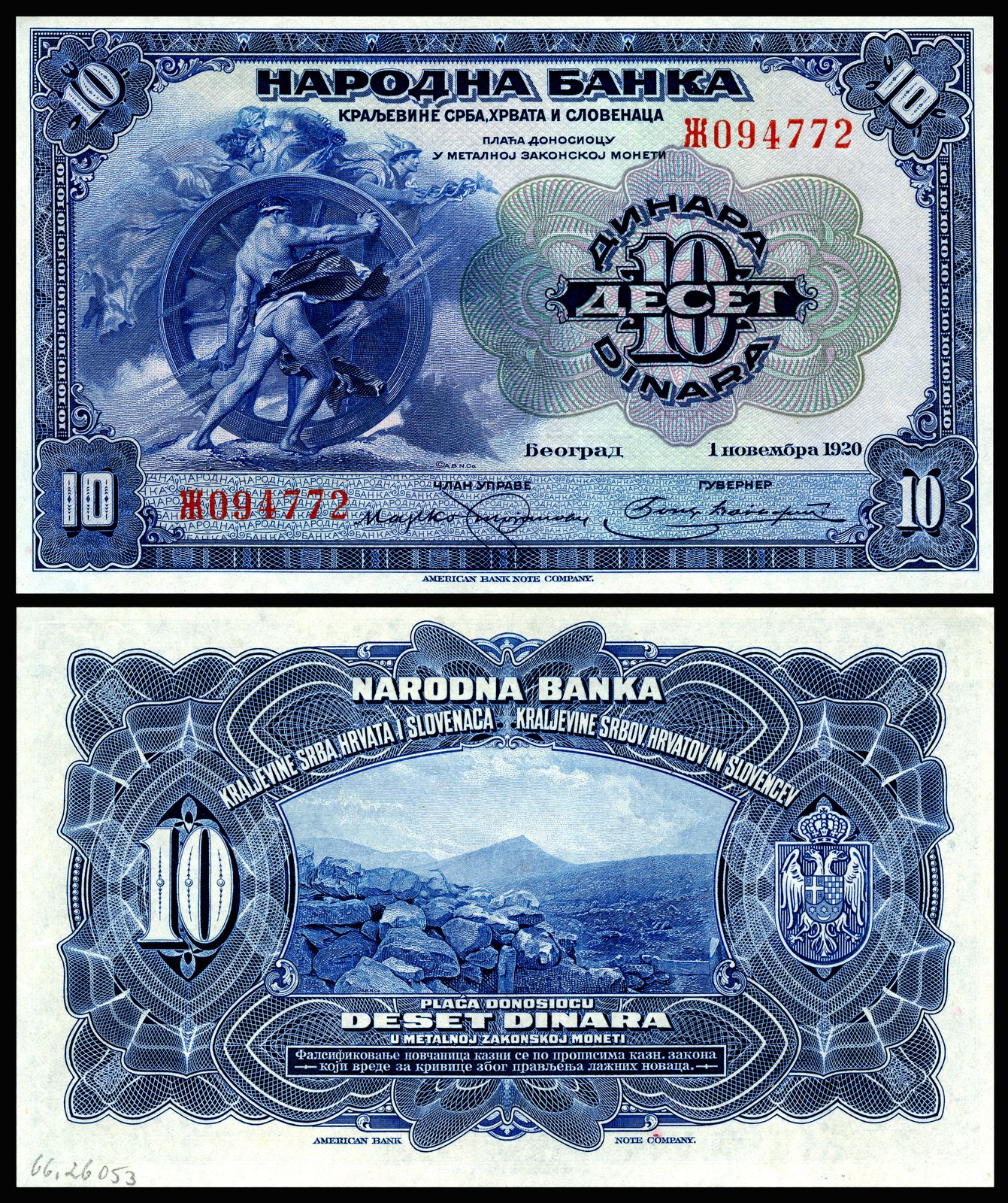
National Museum of American History (Smithsonian) · общественное достояние
In the sphere of paper money collecting, Balkan history is captured with remarkable graphic eloquence. The sixty years between the establishment of the Privileged National Bank of the Kingdom of Serbia in 1884 and the conclusion of the Second World War in 1944 produced some of Europe's most visually striking and numismatically scarce banknotes.
Unlike high-volume postwar Yugoslav currency, many of these prewar and wartime survivors exist in merely dozens or hundreds of documented copies, commanding prices comparable to fine luxury goods.
Milestones of the Kingdom of Serbia (1884–1918)
Serbia's earliest banknotes were produced under the strict craftsmanship of the Banque de France in Paris. They feature multi-tone security watermarks, complex guilloche geometries, and allegorical depictions of agriculture, commerce, and statehood.
The premier rarities of this period include:
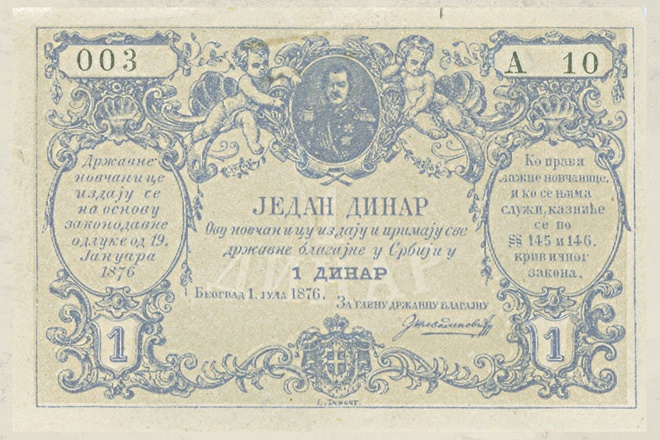
- 1884 100 Dinars in Gold: The inaugural banknote issued by the Serbian National Bank. A tiny survival rate in any collectable grade makes it the crown jewel of Serbian notaphily, realizing five-figure euro sums when offered at premier auctions.
- 1885 and 1887 10 Dinars in Silver: Revered for its balanced blue-and-red palette. Pristine examples consistently draw vigorous bidding.
- Wartime Exile Issues (1914–1916): Printed while the Serbian government and treasury were evacuated during WWI, featuring distinct watermark variants and governor signatures.
The Turmoil of WWII Occupation (1941–1944)
Following the Axis invasion of Yugoslavia in April 1941, the monetary system splintered. Under German military administration, the Serbian National Bank was established in Belgrade.
Due to immediate paper shortages in spring 1941, the new authority repurposed stored pre-war Kingdom of Yugoslavia banknotes by applying official validation overprint stamps.
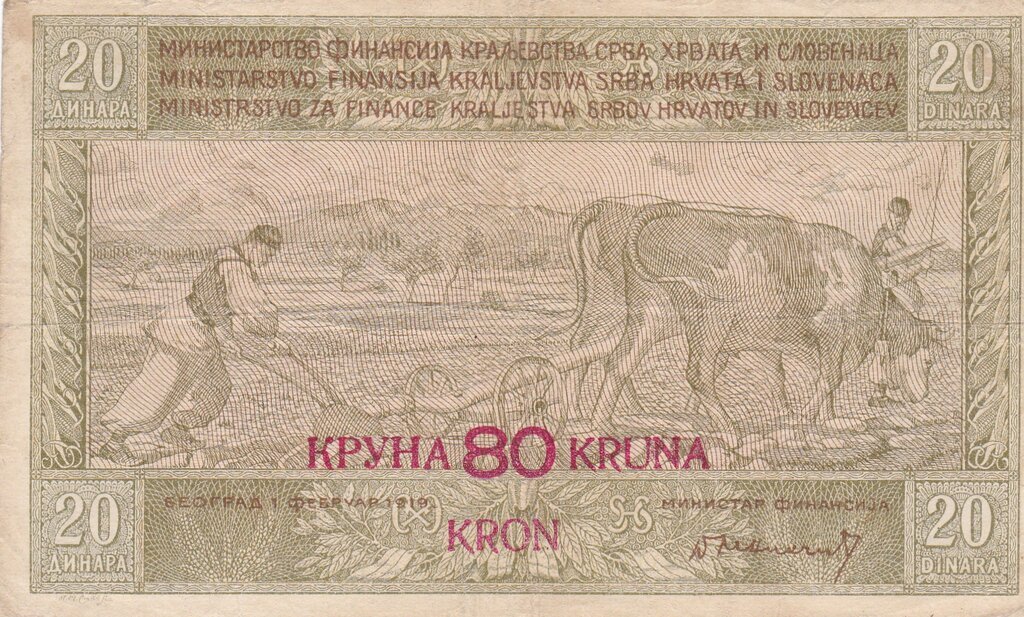
Ministarstvo finansija Kraljevine SHS · общественное достояние · Wikimedia Commons
Notable occupation categories:
- Overprinted 10, 20, and 50 Dinars (May–July 1941): Classified by handstamp varieties, ink chemistry, and plate alignment. Inverted or double overprint errors represent coveted museum pieces.
- Regular Occupation Series (1941–1943): Denominations of 100, 500, and 1,000 dinars portraying traditional Serbian folk costumes, harvest laborers, and Orthodox medieval monasteries. Uncirculated 500 and 1,000 dinar notes command strong three-figure values.
- Specimen Notes: Punched or stamped "SPECIMEN" or "UZORAK", distributed to international financial institutions to prevent counterfeit acceptance.
Verifying Authenticity vs. Replicas
Because rare Serbian banknotes fetch elevated prices, collectors must be vigilant against modern reproductions:
- Paper Quality: Authentic period paper was woven from pure cotton rag and flax fibers. Under long-wave UV light, genuine historical paper remains non-fluorescent and dark.
- Tactile Intaglio Relief: Running a finger lightly across the primary artwork reveals the distinct raised tactile ridges of steel plate printing.
- True Watermarks: Authentic watermarks are ingrained into the paper pulp thickness during fabrication rather than stamped with oily ink.
Preservation Rule: If you discover a historic banknote, do not attempt to flatten it with an iron, wash stains, or apply adhesive tape. Adhesive tape permanently stains paper fibers, and heat flattens intaglio embossing.
Realizing Maximum Value
Top-tier Serbian banknotes should not be sold at flat pawnshop valuations. Placing them into curated online auctions allows institutional collectors and private investors to compete, ensuring you achieve true international market value.