Zagor and Dylan Dog: why Bonelli comics are still the most in demand
Broad demand, enormous print runs and therefore modest prices — how the Bonelli titles still make money, and which copies break away from the average.

The Bonelli characters are the steadiest part of the regional comics market. Zagor, Dylan Dog, Mister No and Martin Mystère are asked for continuously, in any year and any town. That is good news for a seller — and simultaneously the reason prices rarely climb.
Steady demand, ample supply
The collecting market runs on the gap between how many people want something and how many copies survived. For Bonelli titles the first number is large, but so is the second: a great deal was printed, a great deal was read, and a great deal was kept.
The practical consequence: an average issue in average condition sells reliably, but cheaply. That reliability is itself a value — this is stock that always moves, unlike a rarity that waits for its buyer.
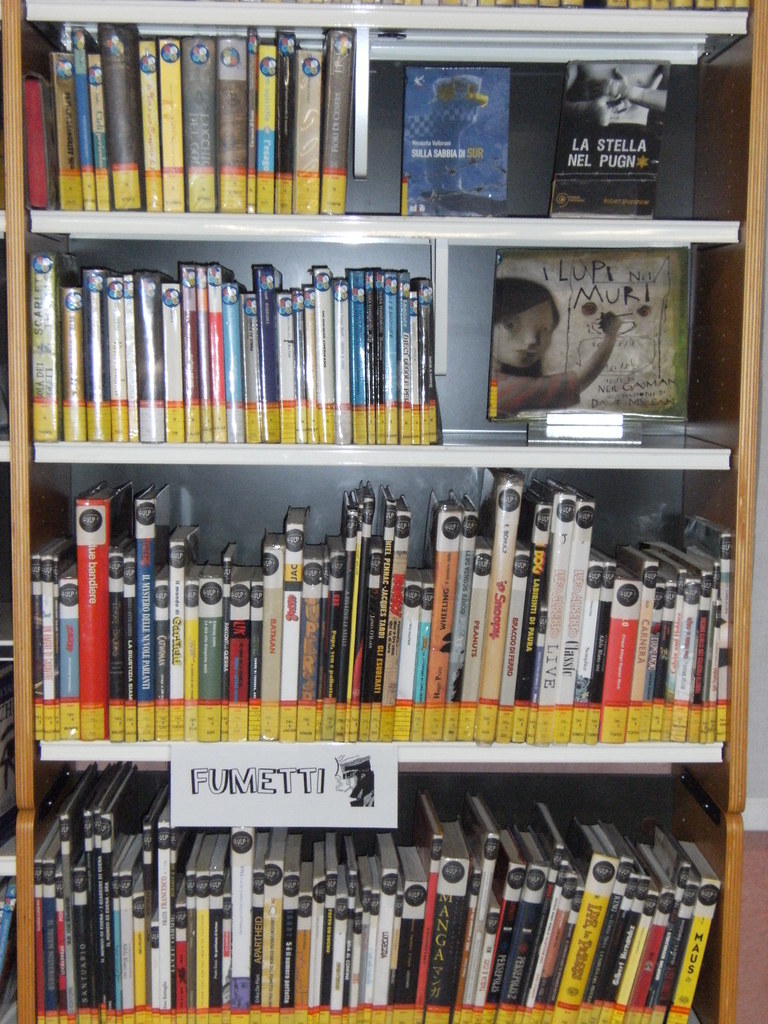
Фото: Comune di Schio · CC BY-ND 2.0 · Flickr
Where price differences do exist
Four places where a Bonelli title leaves the average behind:
Hardcovers and collector editions. Bound volumes, anniversary issues and specials had smaller print runs and a different audience. Do not benchmark them against ordinary monthly booklets — they are different objects.
First issues and first appearances. As everywhere, the start of a run is the thinnest part of supply. It shows especially with Dylan Dog, which became a cult title retroactively while its early issues were consumed as ordinary stock.
Unbroken runs. A collector has no trouble finding a single issue — the trouble is finding fifty at once in comparable condition. That is what carries a premium.
Above-average condition. When the normal market grade is a 3, a grade 1 copy is not thirty per cent dearer but several times so: it competes not with the same issue but with the absence of an alternative.

Selling without losing months to it
For Bonelli titles, a lot almost always beats an individual listing. The arithmetic is simple: the time spent photographing, describing, corresponding and packing one issue is the same as for thirty. The price difference is not.
A lot that sells well follows one of three logics:
- A range of issues. "Issues 101–150, none missing" — the buyer knows immediately what it closes.
- A year or period. One full publishing year, in consistent condition.
- A condition threshold. "All grade 2 or better" — a collector maintaining a standard knows what they are getting.
What sells badly is a random pile with no logic, because the buyer cannot tell what part of it they actually need.
The rule that saves the most time: if you would ask less for an item than postage plus an hour of your time, it belongs in a lot, not a listing.
What not to do
Do not mix titles in one lot. Zagor and Dylan Dog share an audience about as much as two different novelists do: the overlap is real, but a buyer only ever pays for what they collect.
Do not sell hardcovers at softcover prices. The commonest mistake with inherited collections, and the most expensive.
Do not wait for a run to "appreciate". With print runs this size, time does not manufacture rarity — it only wears out paper.
In short
Bonelli comics are stock, not an investment, and that is perfectly fine: stock sells quickly and without drama. The money here is not made by waiting but by packaging — a well-assembled lot returns more than the same pile sold at random, and it returns it in a week rather than a year.