Darwil watches: history, models and what they really fetch
The most widespread watch of the Yugoslav era: which versions collectors actually want, why most are worth little, and how not to sell a gold case at plated prices.
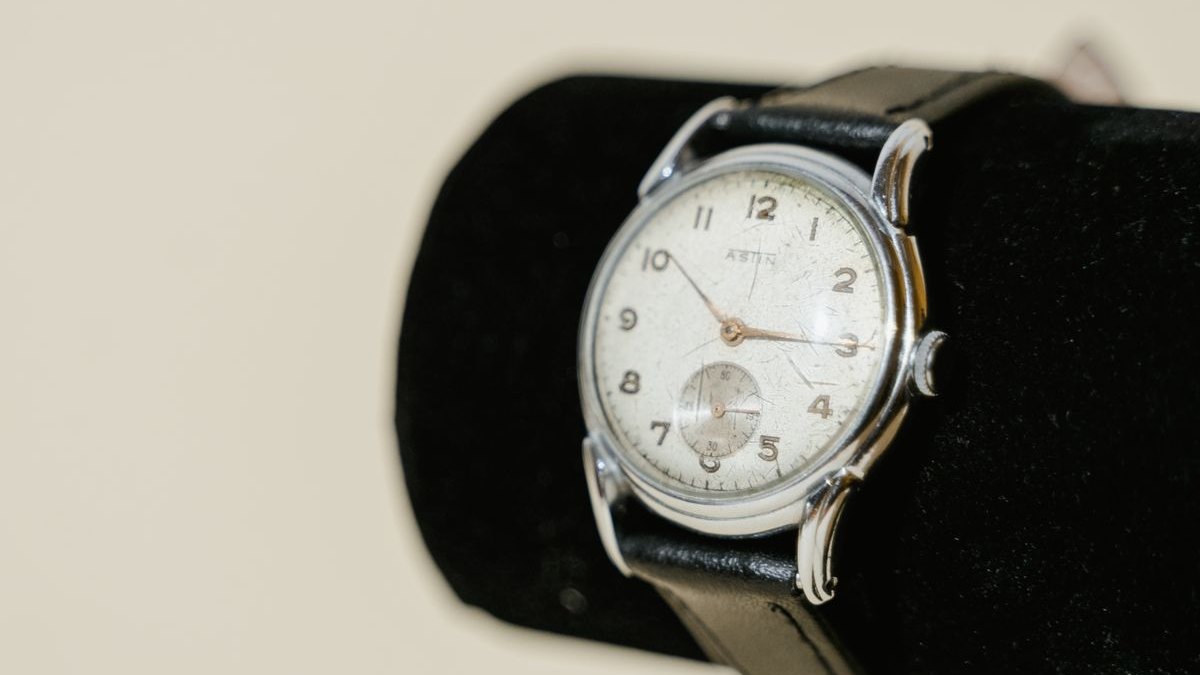
Darwil is the watch that turns up in nearly every inherited drawer in this region. That is also its single most important market characteristic: ubiquity. When there is a lot of something, the price is set by supply, not by sentiment.
Why there are so many
A Darwil was what you bought for a graduation, a retirement, or a work anniversary. It was not a luxury but standard, affordable, dependable goods — and it sold in quantities that were enormous for one market. The consequence: a great many examples are in circulation today, most in similar, average condition.
That does not make them worthless. It means the value is not in the name but in which particular example you are holding.
What separates a cheap example from an interesting one
Case material. The biggest difference and the commonest oversight. There are gold-cased versions and versions with thin plating over brass. The first have a price floor independent of condition or market; the second do not. Plating shows itself at the edges and lugs, where it wears through first.
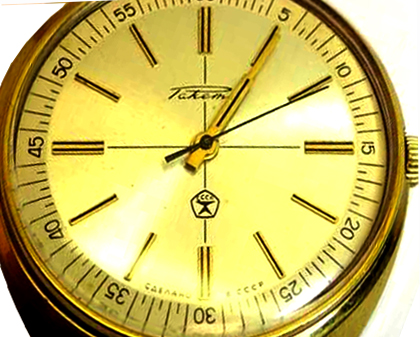
Фото: Valenguk135 · CC BY-SA 4.0 · Wikimedia Commons
Dial condition. On mass-market watches the dial decides, because the movements are similar to each other and interchangeable. A clean, original, evenly aged dial lifts the price appreciably; a repainted one sinks it.
Unusual versions. Sports models, chronographs, watches with complications, editions carrying a company or sports club name on the dial. It is a narrow layer, but it is the one that separates an auction item from a lot item.
Completeness. With a mass-market watch, the original box, papers and warranty card can be worth proportionally more than they would on an expensive one — because almost nobody kept them.
Realistic expectations
An honest frame looks like this:
| What you have | How it sells |
|---|---|
| Plated, average, running | In a lot with other watches |
| Plated, unusual model or excellent dial | Individually, worth an auction |
| Gold case | The price has a floor: weight and fineness |
| Not running, parts missing | Spares, or a "for service" lot |
The most expensive mistake with a Darwil is not underselling it but selling a gold case as a plated one. Check the hallmark before any conversation.
Selling without wasting time
For average examples a lot is the only sensible route: the time per item is the same whatever the price, and the price is not. A good lot is one that means something to a buyer — "five mechanical watches, all running", or "seven watches for parts and service" — rather than a random pile in which the buyer cannot tell what they are looking at.
For individual pieces — gold, unusual versions, an excellent dial — auction beats a fixed price for the same reason as everywhere: if you do not know the ceiling of someone else's willingness to pay, do not guess it.
Before asking for a valuation
- Photograph the dial straight on, in daylight, no flash.
- Photograph the case back with all its markings and hallmarks.
- Look at the edges and lugs: bright yellow under a worn layer means brass.
- Do not polish, do not change the strap, and do not send the dial out to be "refreshed".
You sell a watch once. An intervention that took away its originality is not undone by any later repair.