Vintage Swiss watches: verifying an original and checking the movement
Serial numbers, calibres and fineness hallmarks: the practical checks before buying or selling, and why an "assembled" watch is a commoner problem than a fake.
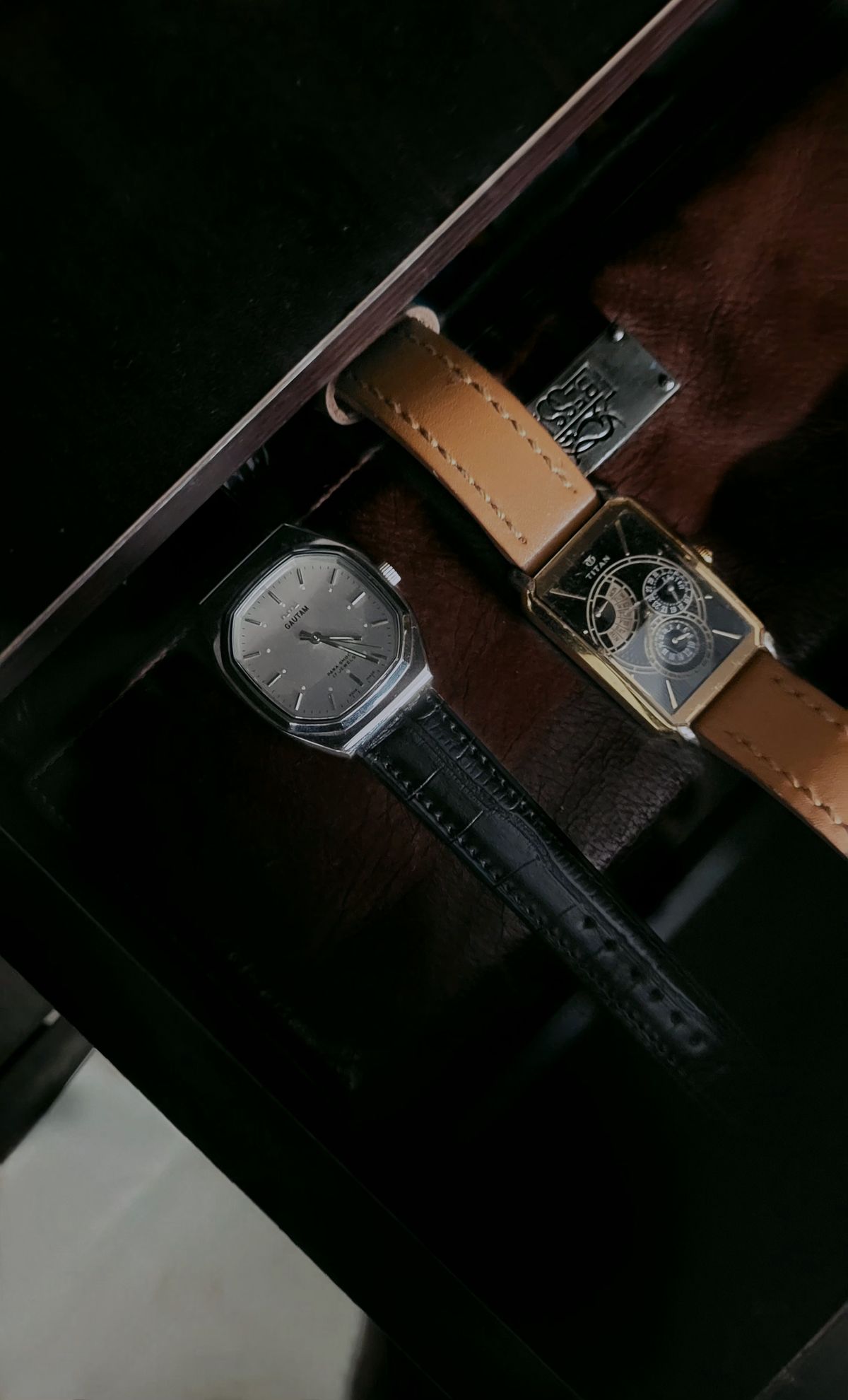
With mid-twentieth-century Swiss watches, the biggest risk is not forgery. Forgery is rare because it does not pay at the middle of the market. The commoner and costlier problem is the assembled watch: one watch's case, another's movement, a third's dial, a fourth's hands. Every part is genuine — the watch as a whole is not.
Three numbers to find
The calibre number. Stamped on the movement, usually on a bridge or on the plate under the balance. This is the single most important fact about a watch: it establishes who made it, when, and in what class.
The movement serial number. With better makers it allows dating. If the dating period does not agree with the design of the case and dial, you have an assembled watch.
The case number and hallmarks. Inside the case back, along with the material markings.
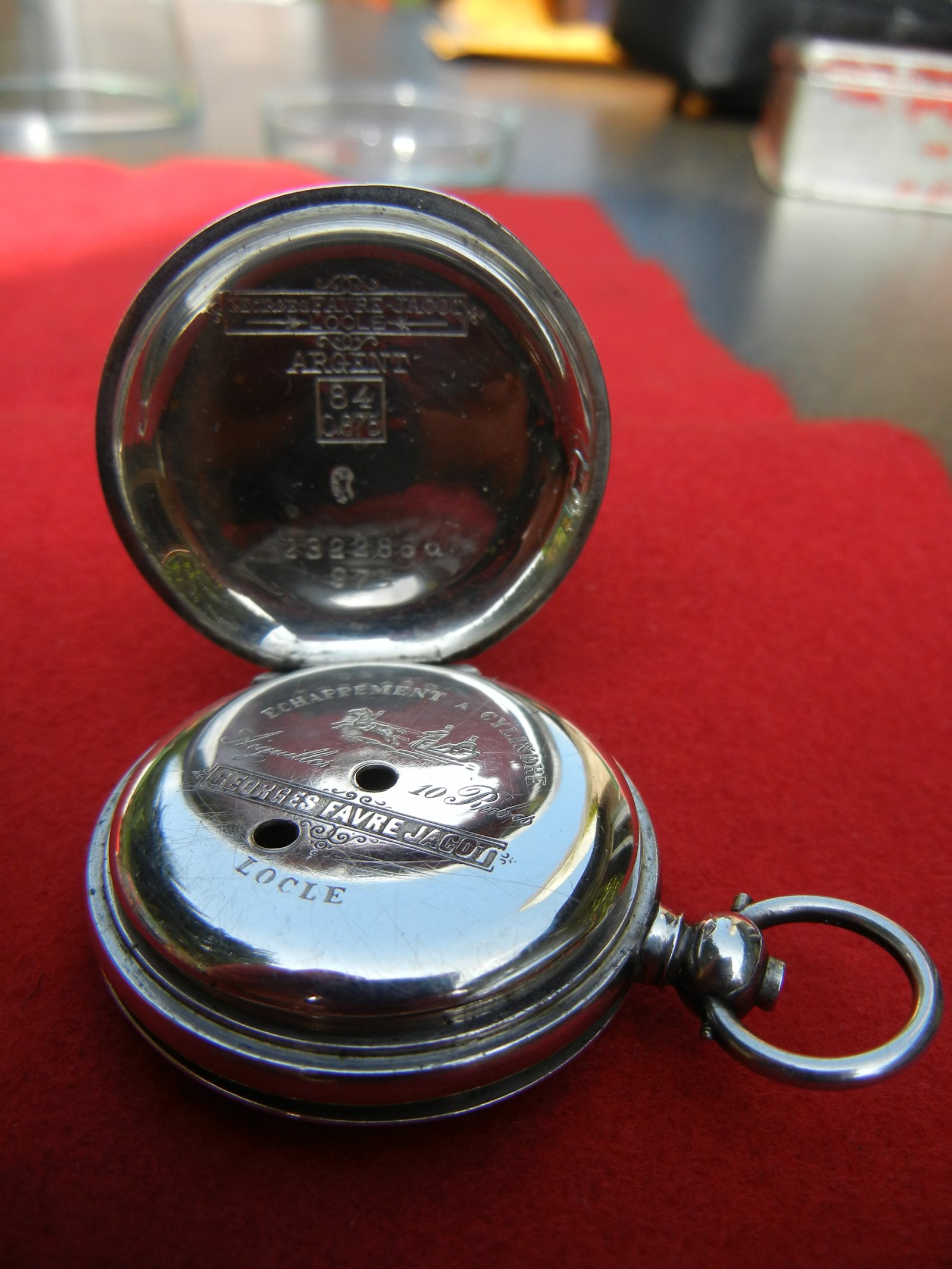
Фото: Zeigerpaar · CC BY-SA 3.0 · Wikimedia Commons
Gold, plating and everything between
This is where people err in both directions most often — selling gold at plated prices and buying plate at gold prices.
- Solid gold carries a struck fineness hallmark inside the case back alongside an assay office mark. The figure reads clearly unless the case has been over-polished.
- Gold filled / plaqué is a thick layer of gold mechanically bonded to a base metal. It is far more durable than electroplate and often carries a marking with layer thickness in microns or a guarantee in years.
- Electroplate is a thin layer that wears through first at the lugs and edges, revealing yellow brass underneath.
The price difference between the three is large; the difference in a photograph is small. Which is why you look for the hallmark every time, without exception.
The dial: original, patinated or repainted
The vintage watch market pays for originality, not prettiness. A repainted dial typically cuts the price to a fraction of what the watch would fetch untouched, even when it looks better to the naked eye.
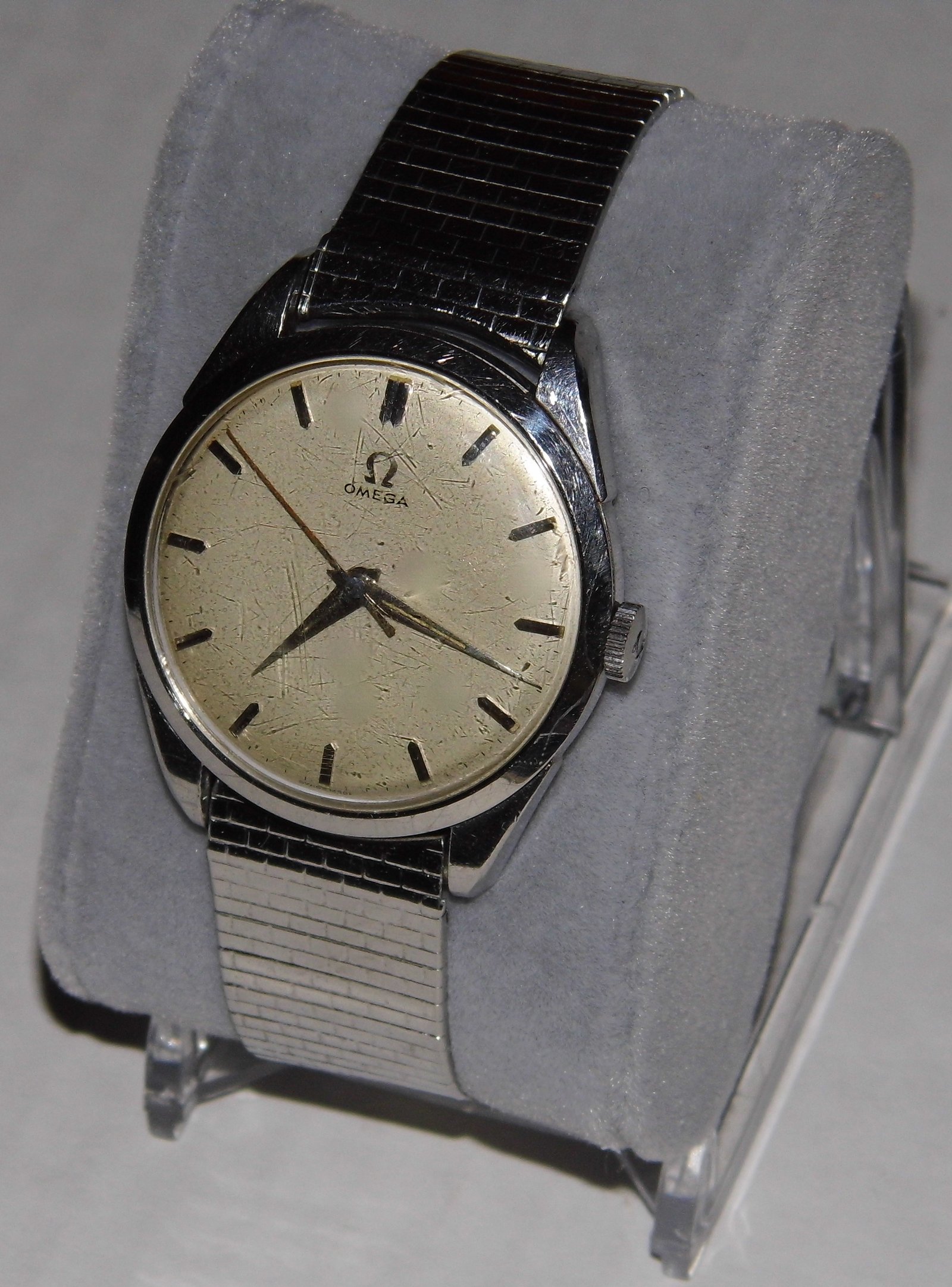
Фото: Joe Haupt · CC BY-SA 2.0 · Wikimedia Commons
What gives a repaint away:
- Print thickness. Original printing is sunk into the surface; new printing sits on top of it and shows at an angle.
- Colour that is too even. A real dial ages unevenly, because it was never lit evenly.
- The lume in the markers. Original lume has cracked, darkened and partly fallen out. New lume is uniform and too bright.
- Mismatch with the hands. Hands and markers age together — or they are not original.
The movement: what to look at under a loupe
- Whether the calibre matches the model. Calibre references are publicly available; this is a five-minute check.
- Signs of rough servicing. Chewed screw slots, scratches around bearings, replacement screws of a different colour.
- Rust. Pitting on steel means moisture got into the case. That is a cost invisible from outside.
- Amplitude and rate. If the watch runs, a steady rate is enough; the buyer will do the precise measurement.
If you are selling, dismantle nothing and take it nowhere for a "quick clean". Photograph the movement through the open case back and let the buyer assess it. Every intervention of yours is an unknown to them, and unknowns are always deducted from the price.
Turning this into a sale
Swiss watches are the category with the widest price range and the most unevenly distributed knowledge. That is exactly why auction is more useful here than anywhere: if a watch is better than it looks, someone who knows the calibre will recognise it — and pay the difference. At a fixed price that difference simply evaporates, because you did not know to ask for it.
For a listing or a lot, prepare: dial straight on, case profile, case back outside and inside with every hallmark, the movement, and a close-up of the crown. Five photographs settle most questions before anyone asks them.