Where numismatics ends and metal begins
Every silver coin has two prices. How to calculate the lower one in a minute, what lifts a coin above it, and why 1938 silver and the Yugoslav commemoratives rarely go past metal.
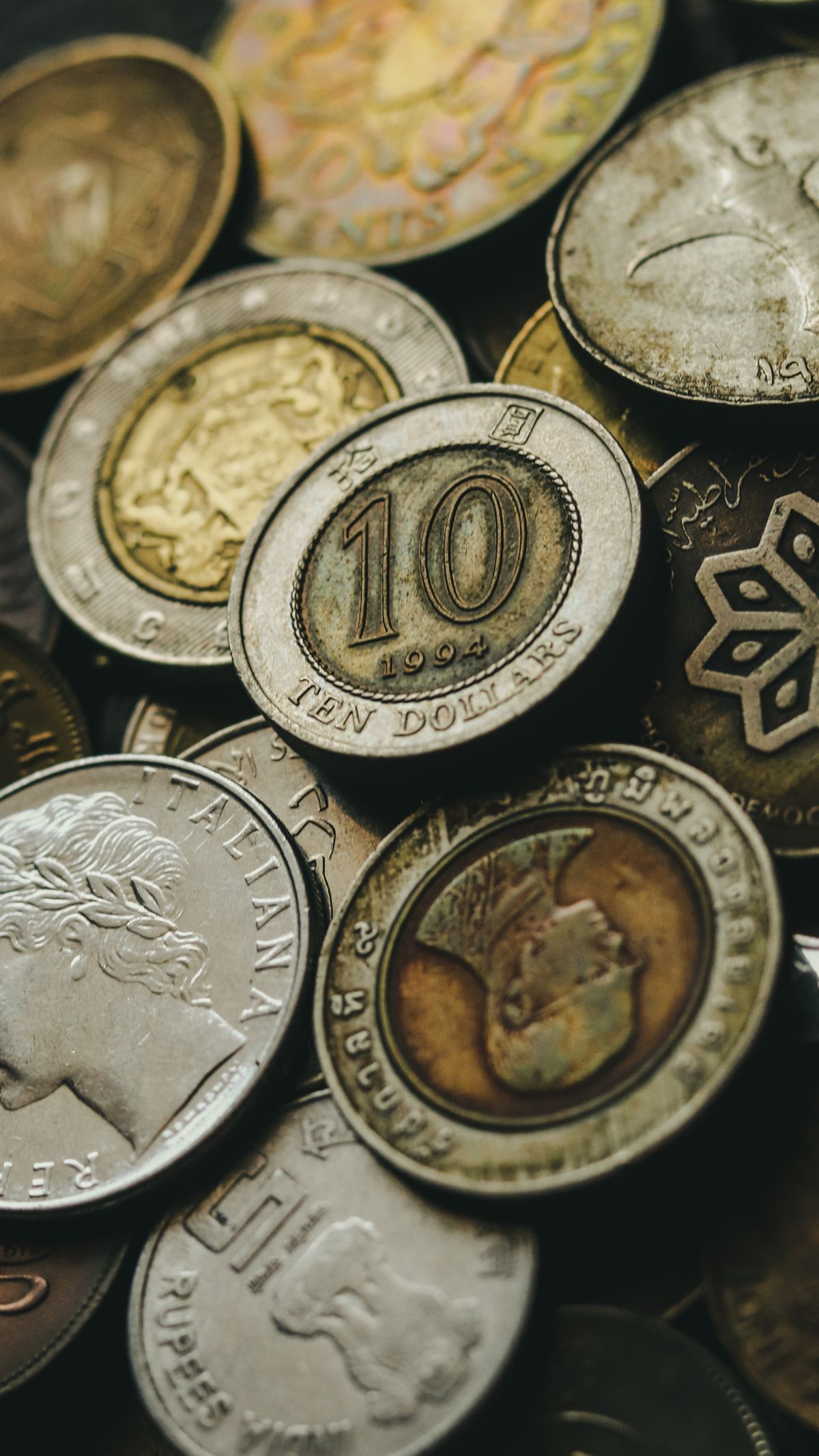
Every silver coin has two prices. The lower one is weight times fineness times the spot price: it always exists, every buyer knows it, and it can be checked in a minute. The upper one is what a collector will pay above metal for that particular piece.
The gap between those two prices is numismatics. The only question worth asking about any silver object is whether that gap exists at all.
With silver out of inherited boxes it usually does not, and that surprises owners. Such silver arrives in two waves: the pre-war one — the last silver of the Kingdom of Yugoslavia — and the socialist one, commemorative issues bought as an investment in the 1980s, cased and certificated. Both live close to the floor.
The rule that explains nearly everything
Coinage struck FOR collectors is almost never rare. Rarity arises where money was spent: where it passed from hand to hand, was lost, melted, and survived in small numbers. A commemorative issue with a published mintage, sold in a case to people who keep it, is the opposite of rarity, however handsome it looks.
Hence the unwelcome conclusion: a silver case from the 1980s is worth roughly the silver inside it.

Calculating the floor in a minute
The arithmetic is the same for every piece:
weight in grams × fineness × spot price of silver per gram
Fineness is the number struck on the piece or known from the issue standard: 900 means nine tenths pure silver, 750 means three quarters. If there is no mark, the piece is weighed and compared against the standard.
That is the floor. Nothing made of silver goes below it, whatever the condition, the scratches, or whether the case was lost. Everything above that number is numismatics, and it has to be earned.
First wave: the Kingdom's silver of 1938
The last silver of the Kingdom of Yugoslavia was struck on the eve of the war, in large quantities, and people immediately began putting it away. They held it through the war, through a currency change, through inflations — which is exactly why there is a great deal of it today, often in very good condition.
The practical consequences:
- An ordinary piece in average condition sells close to metal value.
- An unworn example with original toning carries a premium, because it is wanted for a collection rather than for melting.
- A complete run by year and denomination is worth more than the sum of its parts — it saves the buyer the hunt.
- A cleaned piece returns to metal value. Permanently.
Second wave: the commemorative silver of Yugoslavia
In the 1980s the state struck silver commemoratives and sold them at home and abroad — most of all around the 1984 Sarajevo Winter Olympics, alongside earlier 1970s series and issues connected with Tito's death.
They were sold as an investment, cased and certificated, and bought by people who did not spend them. Mintages were large and almost all of it survived. Therefore:
- A single piece usually sells at silver plus a small premium.
- A complete set in its original case, with certificate and unbroken capsule, is worth appreciably more than the sum of its coins — but because it is complete, not because it is rare.
- A piece out of its case, handled with fingers, is metal.
- A damaged capsule, fingerprints, spotting — on a proof these are irreversible: the mirror field does not come back.
If you have a cased set, do not open the capsules or take pieces out "for a better look". That is the commonest way value is lost between inheriting and selling.
Toning is not dirt
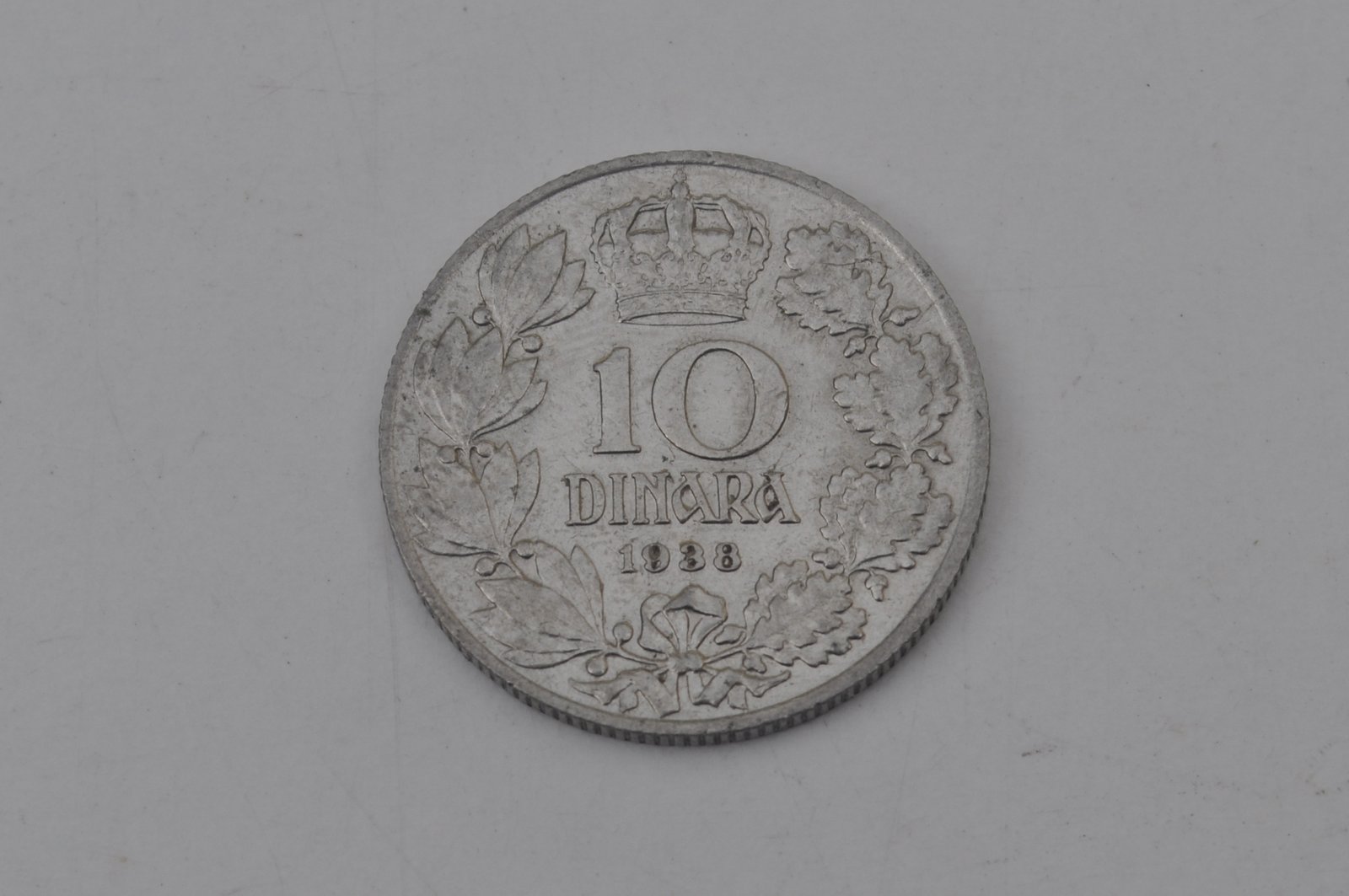
Фото: Народни музеј Топлице · CC BY-SA 4.0 · Wikimedia Commons
Silver darkens evenly over decades, and the market pays for that layer. Chemical stripping leaves a dead, flat, white-grey field with no depth — visible from a metre away and irreversible.
The rule has no exceptions: do not rub, wash, or use paste, vinegar, baking soda, foil or ultrasound. A dirty piece stays dirty until someone who knows what they are doing sees it.
What actually carries a premium
If all of the above sounds discouraging, here is where the premium genuinely lives:
- Circulating silver in a condition that does not turn up. When the usual state is worn, an unworn piece competes not with the same year but with the absence of an alternative.
- Years and denominations with small mintages inside an otherwise ordinary series.
- Completeness: a full year, a full series, a set with all its original packaging and papers.
- Striking errors — off-centre strikes, double strikes, a missing die detail.
- Documented provenance, where a collection was built over a long time and it can be shown.
How to sell
For ordinary silver in quantity — a lot by period or denomination. The time per item is the same whatever the value, and the value is not: listing piece by piece eats the difference.
For anything that might carry a premium — auction. The reason is the same as everywhere the uncertainty works in your favour: at a fixed price you are guessing how much someone will pay over metal, and you miss in both directions. At auction two buyers settle that question between them, and you learn the answer instead of assuming it.
For a valuation: weigh to two decimal places, note the year and denomination, photograph both faces straight on without flash and the edge at an angle. Photograph the case and papers together with the piece — they are part of the object.