Coins of the Kingdom of Serbia and the SHS: what silver dinars are worth
Royal-period silver from 1875 to 1938: what makes one year worth many times another, how wear is assessed, and which varieties collectors chase.
Royal-period silver dinars are the most sought-after domestic numismatic material and simultaneously the category people misjudge most. The reason is that the denomination means almost nothing while the date means almost everything.
Why the date decides
Striking in this period was not even. Issues were tied to specific needs of the state and specific moments, so mintages differ by orders of magnitude from one year to the next. A coin from a low-mintage year is rare however ordinary it looks; a coin from a high-mintage year is common however old it is.
The practical consequence: before selling anything, read the date and check it separately. Everything else is secondary.
The main periods
Early issues of the principality and kingdom (from the 1870s). The first domestic silver. This is the oldest layer and generally the most sought after, because the least survives.
The reign of Petar I (early twentieth century). This is also where commemorative issues tied to state anniversaries sit; they are valued separately from ordinary circulating coinage.
The Kingdom of the SHS and the Kingdom of Yugoslavia (1920s and 1930s). Silver denominations of this period are more numerous and more available, but within them there are years and varieties that stand apart.
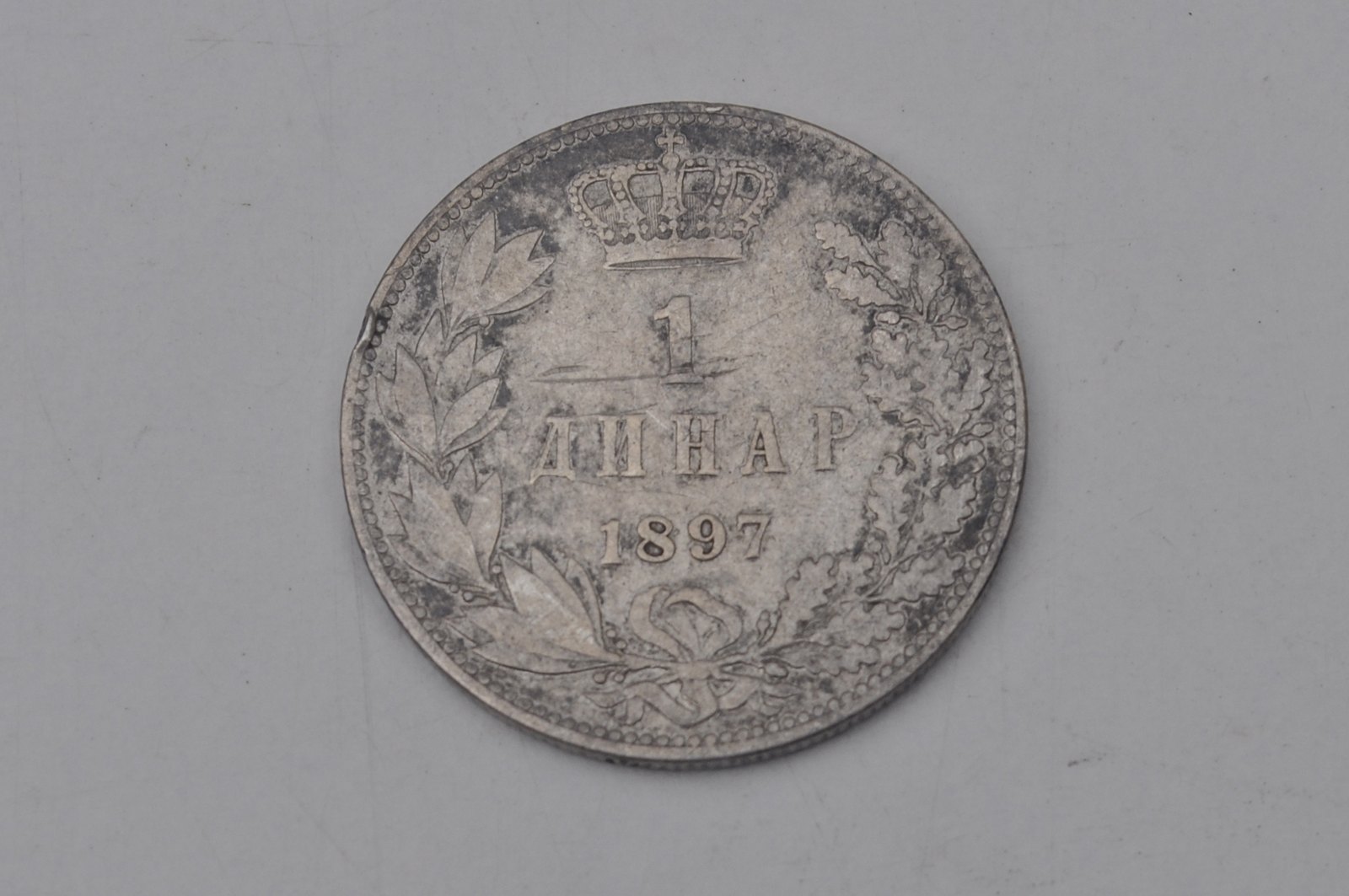
Фото: Народни музеј Топлице · CC BY-SA 4.0 · Wikimedia Commons
How wear is assessed
With circulating silver, wear is the rule rather than the exception — these coins passed from hand to hand for decades. That is why the steps between grades are paid disproportionately: between a worn and a middling example the gap is modest, while between a middling and a nearly untouched one it can be several-fold.
What is examined:
- The highest points of the relief. Hair on the portrait, leaves in a wreath, details of the arms. They wear first.
- Letters and digits. The rounding of letter edges tells more than a general impression.
- The fields around the relief. Scratches and knocks from circulation.
- The edge. Rim knocks are a common and underrated problem.
Varieties that are asked for
Beyond the date, collectors distinguish:
- Different mints for the same year, where issues were produced abroad.
- Small die differences — letter positions, digit shapes, details of the arms. A narrow audience knows these varieties and pays a premium unrelated to that year's general price.
- Commemorative and jubilee issues, which are not lumped in with circulating coins of the same denomination.
- Patterns and unissued strikes — the rarest and dearest layer, where every piece is its own case.
Authenticity checks
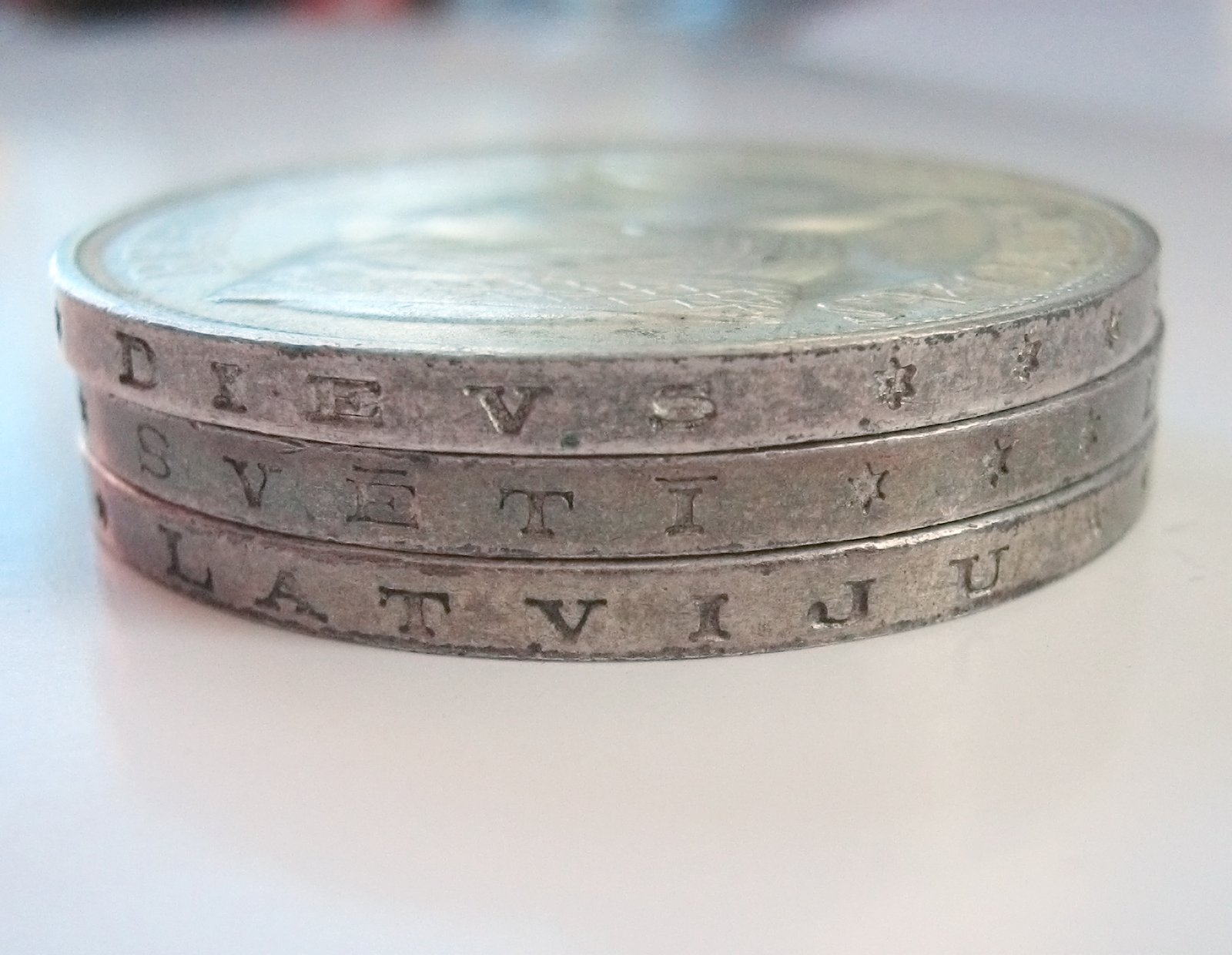
Латвийские 5 латов 1929 · общественное достояние · Wikimedia Commons
Royal-period silver is copied, and has been for a long time. The basic check is the same as for any coin:
- Weight and diameter against the issue standard, measured with an instrument.
- A magnet — silver is not magnetic.
- Sound — silver rings longer and more cleanly than most alloys.
- The edge — reeding must be sharp and even; on cast copies it is soft or irregular.
- The relief — a cast copy has blurred transitions and often small bubbles in the fields.
Do not clean silver before selling. Natural toning on silver is dark grey to bluish and even — and it is paid for. A polished piece with a web of fine scratches is not.
How to sell
For individual pieces with an interesting date, auction beats a fixed price for a reason specific to this category: price lists lag the market. Domestic numismatics is a narrow field and prices move from one significant sale to the next, so a catalogue a few years old can be twice wrong in either direction.
For quantities of common dates in poor condition, a lot by period is the only sensible route — the time per item is the same regardless of value, and the value is not.
The preparation is always the same: weigh it, photograph both faces straight on and the edge at an angle, record the date, touch nothing.