Small and large Franz Joseph ducats: fineness, weight and how value is calculated
The Austro-Hungarian ducat standards, the difference between circulation originals and restrikes, and why the price is calculated from gold content upwards.
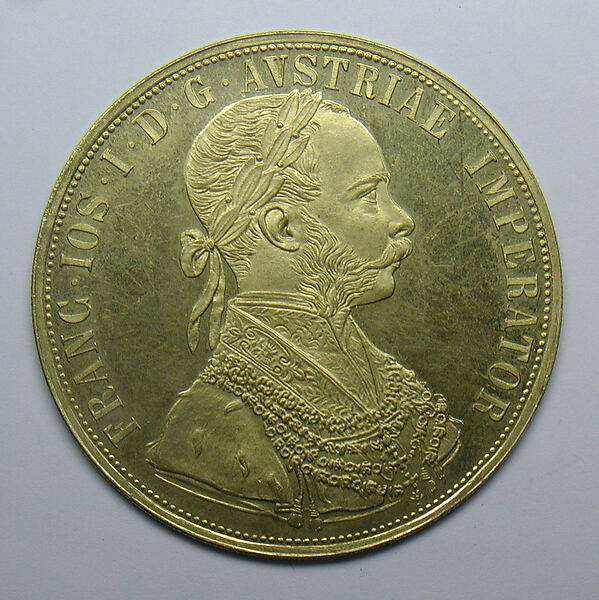
The ducat bearing Franz Joseph's likeness is the most widespread gold object in the region. For decades it was held as savings, given at weddings and christenings and worn as jewellery — so today it sits in nearly every family's box.
For valuation, one thing matters before all others: with a ducat, the price starts from the gold, not from numismatics.
The standards worth knowing
The Austrian ducat was struck to a standard that went unchanged for a long time:
| Total weight | Fineness | Pure gold | |
|---|---|---|---|
| Small (1 ducat) | 3.4909 g | 986/1000 | ≈ 3.44 g |
| Large (4 ducats) | 13.9636 g | 986/1000 | ≈ 13.77 g |
A fineness of 986 is higher than the usual jewellery alloys (585 or 750), which is why a ducat looks conspicuously yellow and is soft — it bends and scratches more easily than a ring.

How value is calculated
The calculation has two layers:
Layer one — the gold. Pure gold weight multiplied by the current spot price. That is the floor, and it moves daily. For a small ducat that is roughly a ninth of a troy ounce; for a large one, roughly four ninths.
Layer two — the numismatic premium. The amount above gold value, depending on whether the piece is a circulation original or a later striking, on the year, the condition, and whether it shows signs of having been worn.
For most pieces that come out of family boxes the premium is small or absent, because they are restrikes. That is not bad news — it is precisely why the ducat was held as savings in the first place: its value is predictable.
Circulation originals and restrikes
Austria continued striking ducats after the end of the monarchy, all bearing the fixed date 1915. Those pieces are official, legal and of full fineness — but they are not rare and carry no numismatic premium over gold.
Originals from the actual period of circulation, with dates other than 1915, are a different story and are valued by numismatic rules: year, mint, condition.
A practical rule: the date 1915 on a ducat means "gold by weight". Any other date means "show a numismatist before selling".
What reduces value
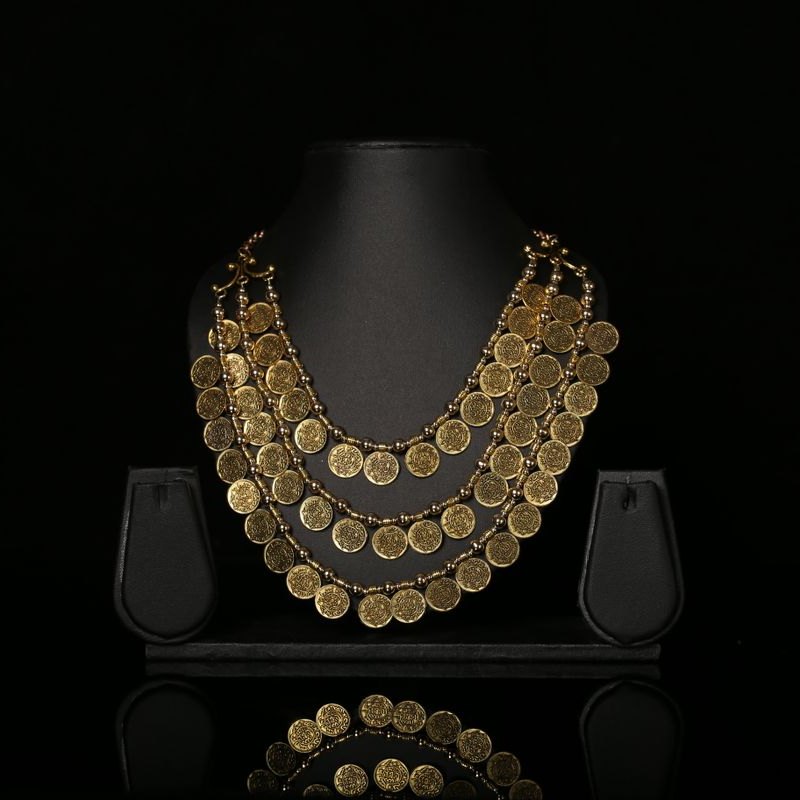
- A hole for a chain. The commonest damage in this region. It erases the premium entirely.
- Solder traces. Even when the bail has been removed, a stain and colour change remain. It shows at once.
- Cleaning. The same rule as for all coins: a shine that is not original lowers the price, it does not raise it.
- Bending. Soft gold remembers every press.
- Wear scratches. A ducat that hung on someone's chest for years carries a web of fine scratches.
Spotting a questionable piece
- Weigh it. A deviation of more than a few hundredths of a gram from standard is reason to stop.
- Measure diameter and thickness. Copies often hit the weight and miss the dimensions — or the reverse.
- A magnet. Gold is not magnetic.
- Colour. A fineness of 986 has a distinctly warm, saturated tone; lower alloys look paler or redder.
- Relief. On cast copies it is soft and blurred, with small bubbles in the fields.
If any of these checks is uncomfortable, the piece is neither sold nor bought without expert assessment. Gold is the one category where a mistake is measured directly in money, with no intermediary.
Where to sell
For pieces dated 1915 with no numismatic interest, selling by gold content is a fast and honest route; the difference between offers comes down to margin.
For everything else — earlier dates, unusual mints, exceptional condition — auction is better, because the premium over gold is not a fixed figure but a question of how much someone wants that particular piece. Open bidding is the only way to find that out rather than guess it.